85% of Men Have Visibly Thinner Hair by 50 — Their Products Had a Problem Nobody Mentioned
And the Once-a-Week Routine Thousands of Men Are Using to Get Past It
By Dr. Blane Schilling | November 9, 2026
Estimated 7-9 Minute Read
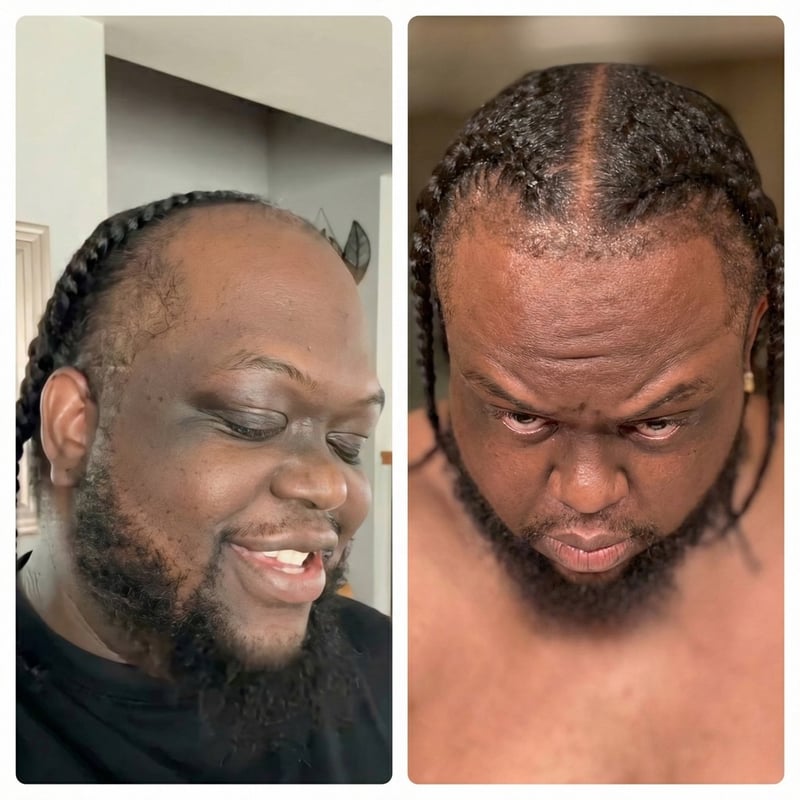
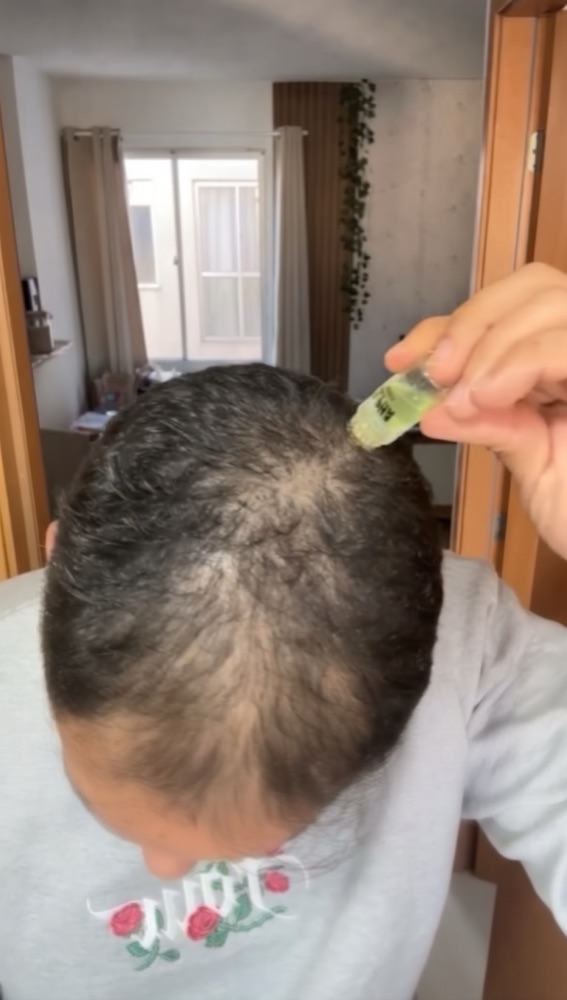
MONTH 1
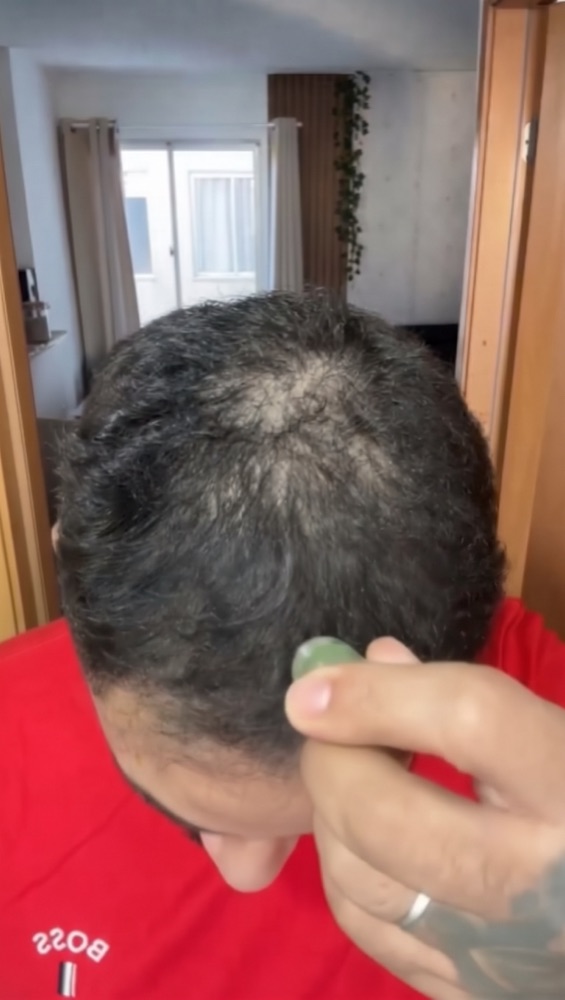
MONTH 3
Lucinei, one press a week. Same crown, same room.
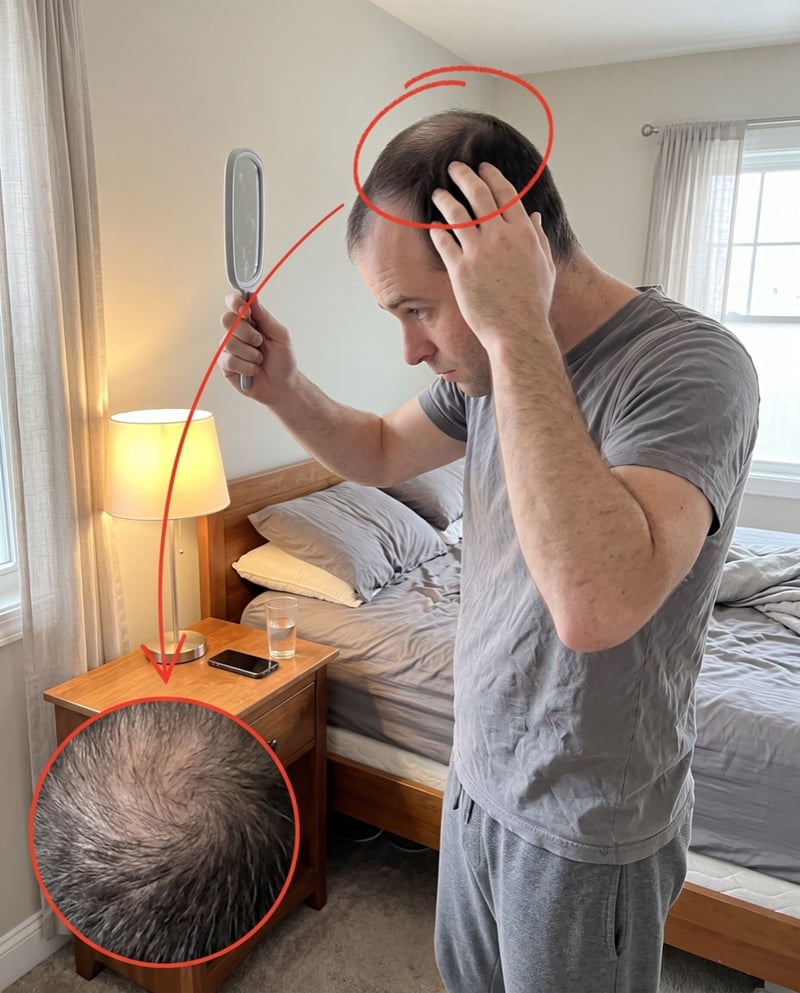
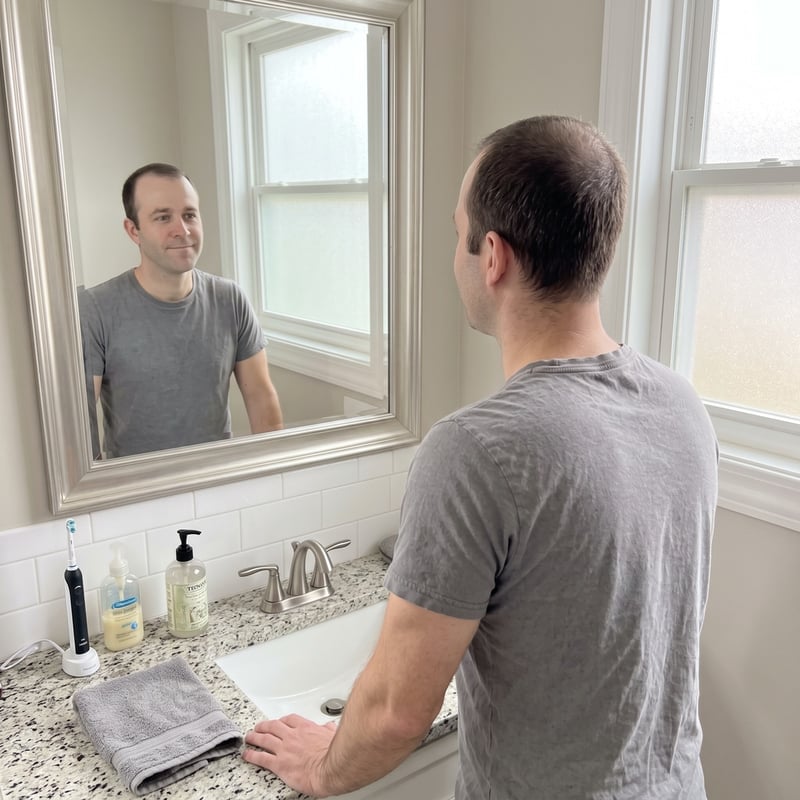
Mike thought his thinning crown was just bad luck.
The 34-year-old sales manager from Columbus, Ohio first saw it in a photo his sister posted from a wedding. Shot from the balcony. Pink scalp under the reception lights.
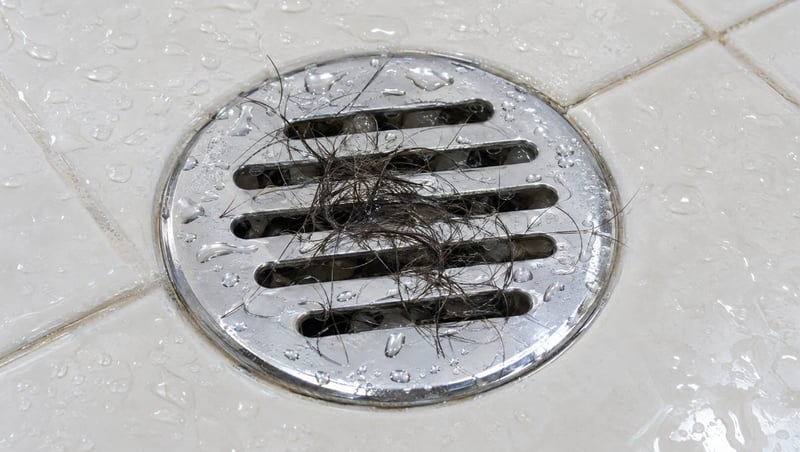
After that he noticed it everywhere. The bathroom mirror at work, with the light right overhead. More hair in the shower drain. The way he started tilting his phone up for every picture.
So he did what most guys do. Thickening shampoo first. Then rosemary oil. Then hair gummies. He gave a hair-loss foam a few months, but it left his hair greasy and he hated putting it on before bed.
"I'd tried just about everything," he says. "I figured it was my dad's genes and I'd lost."
But it wasn't bad luck. And he's far from alone…
look, the signs you've been brushing off are real
Do any of these sound familiar?
You check the back of your head with your phone camera
There's more hair in the drain or on your pillow than a year ago
You can see scalp under bathroom lights, in elevators or on video calls
Your hair looks a lot thinner when it's wet
Your temples sit farther back than they do in old photos
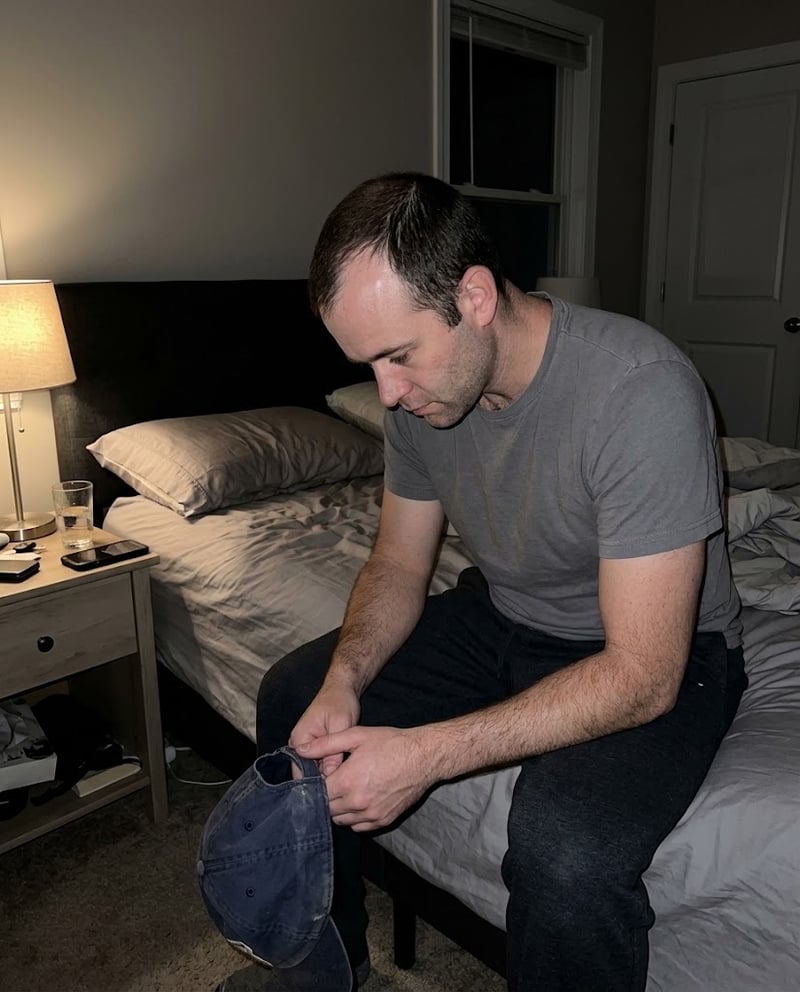
You wear a cap more than you used to, sometimes indoors
You crop or retake any photo taken from above
Most guys tick at least two.
They blame stress, age, or their dad. They buy a different product for each worry: a shampoo for the shedding, an oil for the crown, a gummy for "hair health."
But what if every one of those signs starts in the same place? A place none of those products ever reach.
the quiet shrink under your scalp
It's not happening where you've been looking
If two or more of those sound like you, here's what's going on.
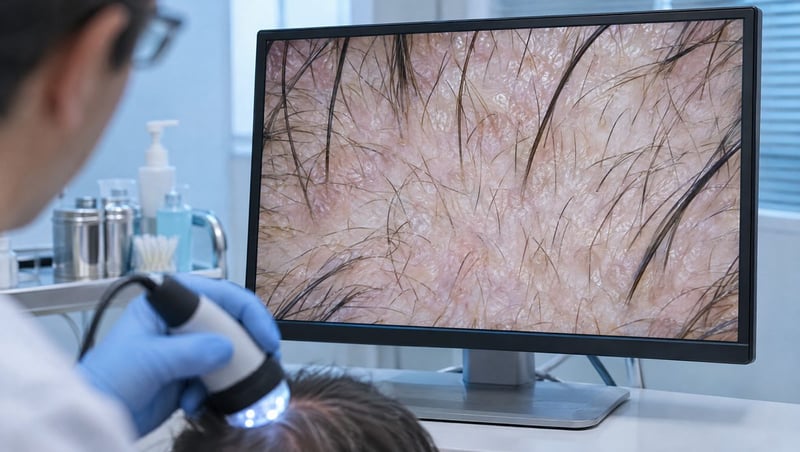
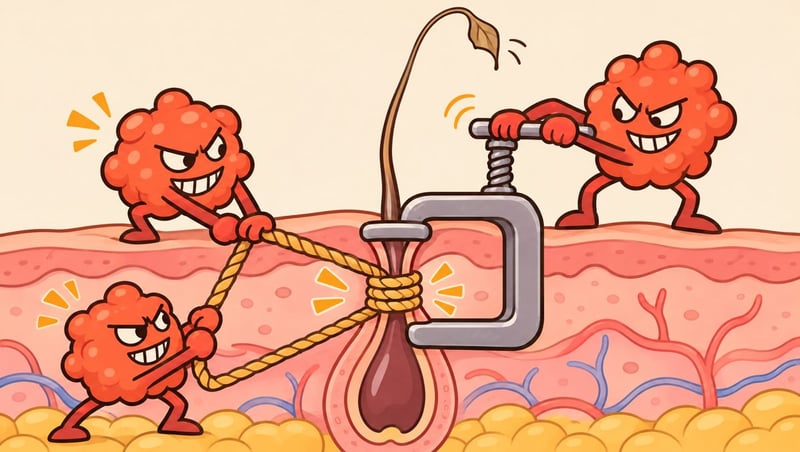
Thinning isn't decided on the surface. It's decided at the root, a few millimeters under your skin.
In most men, a hormone called DHT slowly shrinks the follicles that grow your hair. Doctors call it miniaturization. It's behind more than 95% of hair loss in men.2
Every time a hair falls out and grows back, it comes back a little finer. A little shorter. A little weaker.
How many men it hits
By age 35about 2 in 3
By age 5085%
Source: American Hair Loss Association2
That's why it sneaks up on you. You don't lose your hair in patches. The hairs you have get thinner, until one day the light hits your crown and you can see scalp.
Under the skin, it is:
Shrinking each follicle a little more every cycle. That's why your hair looks thinner before it looks gone.
Making every new hair finer than the last one. That's why it looks worse wet.
Cutting short how long each hair grows. That's why there's more in the drain.
It's like a lawn in a dry summer. The grass doesn't vanish overnight. Every blade just comes back weaker, until you see dirt.
So it's not your fault. And it's not a lack of effort. You've been fighting it on the surface while it happens underneath.
the roots should be easy to reach…
But there's a wall in the way
Here's what makes it worse.
Your scalp is built to keep things out.
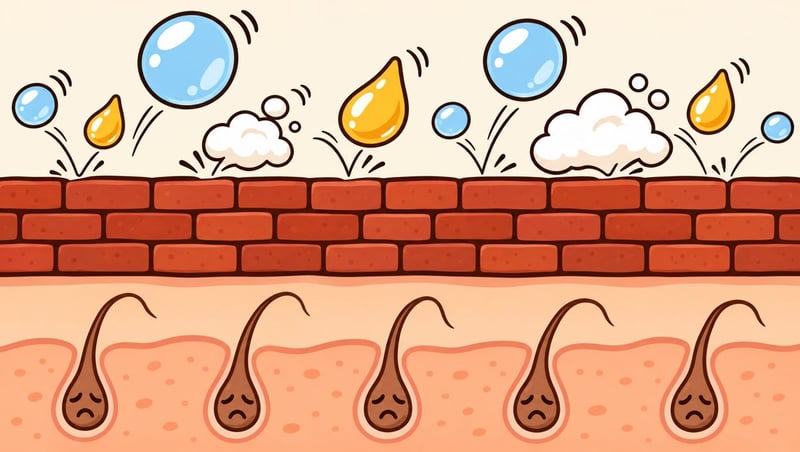
The top layer of your skin is a tight wall of flat, dead cells sealed together with fats. Dermatologists call it the stratum corneum. Its job is to keep the outside world out: dirt, germs, water.
And, as it turns out, most of what you've been putting on your head.
Think of a tarp laid over a lawn. You can water it every day. The grass underneath stays dry.
That's why nothing you've tried has done what the label promised:
Thickening shampoo?On your scalp for about a minute. Then down the drain.
Rosemary oil and foams?Sit on top of the wall. Plenty of it ends up on your pillow.
Gummies and pills?Go through your whole body to reach a few square inches of scalp.
A hair transplant?Moves hair from the back to the front. The process that thinned it keeps working on what's left.
The formula might have been fine. It just never got to where the problem is.
WE CALL IT
The Surface Problem
Almost everything for thinning hair works on top of a wall that's built to keep it out. Once you see it, every bottle in the hair aisle looks different.
the study that changes everything
One weekly step. Over 4x the new hair.
This is where Mike's story turns.
After years of "dealing with it," he came across a study that had been sitting in a dermatology journal since 2013.1
Dermatologists in India took 100 men aged 20 to 35. All of them had the classic pattern: a receding hairline or a thinning crown.
For 12 weeks, every one of them got the standard treatment doctors recommend first.
Half of them got one extra step. Once a week, their scalp was microneedled: tiny needles that open thousands of microscopic channels through the skin's top layer.
That was the only difference.
Researchers counted every hair in the same marked patch of scalp, before and after. Here's what they found:
12-week study · 100 men aged 20–35 · published 20131
With weekly microneedlingWithout
New hairs in the same scalp patch
With microneedling+91.4
Without+22.2
Men who rated their improvement above 50%
With microneedling82% (41 of 50)
Without4.5% (2 of 44)
First new growth noticed
Around week 6Around week 10
Same kind of men, same 12 weeks. The only change was getting through the wall once a week.
More than four times the new hair.
Not a new drug. Not a stronger formula.
A better way in.
why the way in matters more than the formula
What golf courses figured out decades ago
Golf greens have the same problem. The ground packs hard, and water and feed just sit on top.
So greenskeepers don't water harder. They punch thousands of small holes into the turf first. It's called aeration. Then they feed it, and it goes down to the roots.
Microneedling does the same thing for your scalp. The needles open tiny channels through the wall, and whatever goes on next can finally get below the surface. The channels close back up on their own.
But the timing matters.
That's why a $15 roller from Amazon doesn't cut it. You roll, then pour a serum on afterwards, and you're racing the channels as they close. Most of it still sits on top. And a roller you use for months goes dull and dirty.
The men in the study were rolled with 1.5 mm needles. At home you want something shallower, which is exactly why the serum has to go in at the same moment the channels open. Through the needles. One press, done.
That has a name: micro-infusion.
the once-a-week routine that works below the surface
Two parts, one press
Mike found out that getting through the wall is only half of it. What goes through matters too, and so does doing it the same way every week.
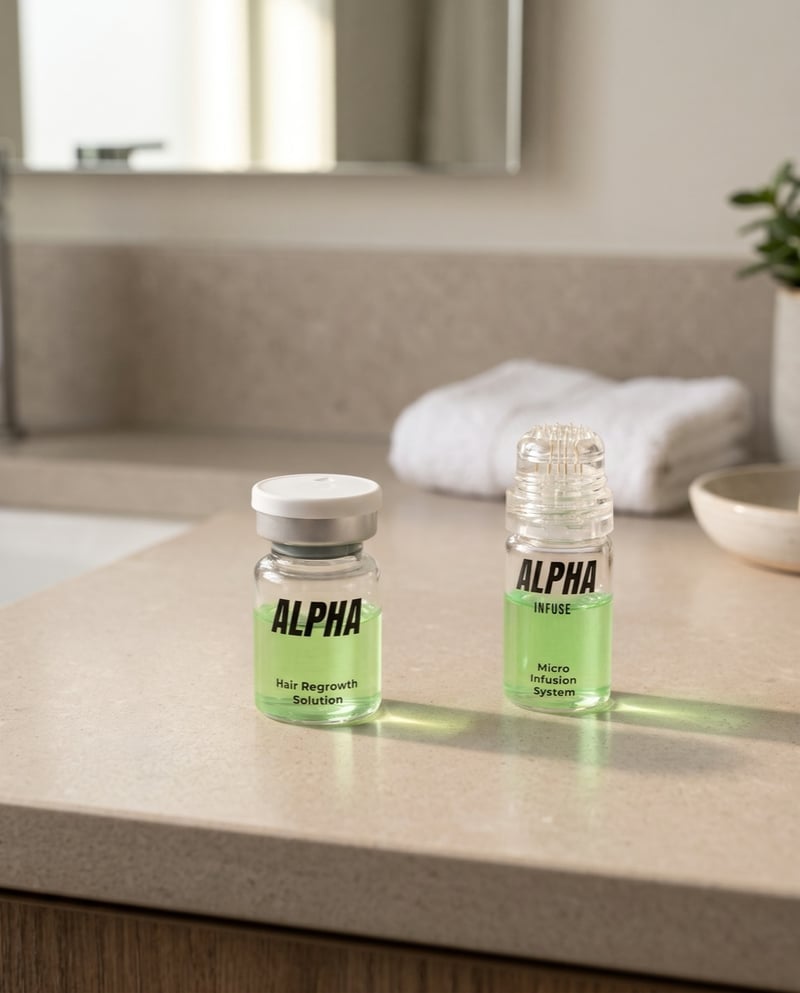
That's why the routine that works uses two parts together:
First
The micro-infuser
A head of ultra-fine, gold-plated needles that opens micro-channels through the top layer of your scalp. Shallow enough to use at home.
Second
The serum
Loaded into the infuser and delivered through the needles, into those channels, in the same press. Panax ginseng and licorice root go after DHT at the follicle. Rosemary and eclipta prostrata wake up follicles that have gone quiet. Nothing to rinse off. Nothing drying on your pillow.
Other products sit on top. Micro-infusion delivers the serum below the surface.Ginseng · Licorice root · Rosemary · Eclipta prostrata
1Pop the vial
2Pour it into the infuser
3Press it wherever it's thinning
Once a week. About 60 seconds on a Sunday night. Then you forget about it until next Sunday.
No twice-a-day foam. No daily pill.
★★★★★
"I used Rogaine for a year. Nothing. Finasteride scared me off. I almost didn't buy this because I was done being disappointed. 90 days in and the top of my head looks like it did in 2019."
Jay · Verified Buyer
finally, a way through the wall you can use at home
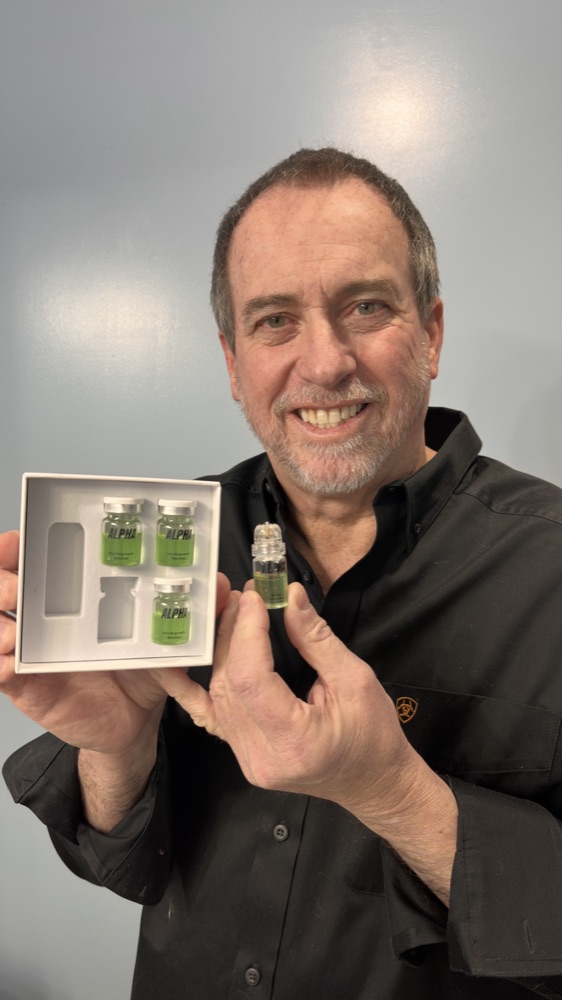
It's called AlphaInfuse
Remember that study? Where one weekly step gave men more than four times the new hair?
AlphaInfuse took that idea, getting the formula through the wall instead of leaving it on top, and built it into a kit you use at home, once a week.
Unlike the serums, foams and oils in the hair aisle, it doesn't sit on top of your scalp. The serum goes in through the needles, in one press.
Micro-infusion, not micro-needling: up to 300% deeper absorption than topicals alone
Dual-action serum: ginseng and licorice root against DHT, rosemary and eclipta for dormant follicles
Rated 4.8 out of 5 by verified buyers
120 days to try it. If you don't like what you see, you get your money back, and you keep the kit
Receding hairline · before → afterJack C. · before → after
Individual results may vary.
★★★★★
"I just finished my 4-month kit. First product I've ever used that actually gave me something to look at in the mirror. My barber noticed before my wife did."
Dave · Verified Buyer
★★★★★
"I was 2 weeks from booking a transplant consultation. My buddy told me to try this first. Six months in and I'm not even thinking about the clinic anymore."
Marcus · Verified Buyer
★★★★★
"I always kept my hair short because it was getting too thin to style. After about one month, I started noticing my hair felt thicker. By month three, my barber even mentioned it looked fuller."
Verified Buyer
What guys told us in our post-purchase survey:
"I have never tried anything that micro needles your scalp."
"Instructions were clear and easy to follow."
"Product feels premium quality."
"The 120 day money back guarantee made me feel better."
here's what nobody tells you
Most guys who quit, quit too early
Most hair ads promise a difference in a couple of weeks. Guys tell us that's exactly what made them skeptical.
Here's the honest version. Hair grows slowly. Here's what the weekly routine looks like:
Weeks 1–2Shedding slows down. Less in the drain, less on the pillow.
Months 1–2First baby hairs, usually at the temples and crown. In the study, new growth showed up around week 6.
Month 3Real density. This is when someone else notices first, usually the barber.
Months 4–6The hat stays home. You stop checking the back of your head.
That's why the guarantee is 120 days, not 30. We want you to see month 4.
Those signs aren't random. They're not "just getting older."
They're the early warning.
Every month you wait:
The follicles keep shrinking
Each new hair comes back finer
The window where they still respond gets smaller
You keep paying for products that sit on top
Now picture the other side of it. A wedding photo from the balcony that you don't crop. Taking the cap off at dinner without thinking about it. Wet hair after the gym that still looks like hair.
That's what it looks like when the formula finally gets where the problem is.
Mike made his call after two years of trying everything.
"I'd already spent a few hundred dollars on shampoos, foam, oils and gummies. This came to under a dollar a day, and with 120 days to send it back, the risk was on them, not me."
Month one, he noticed less in the drain. Month three, his barber asked what he'd changed.
"I stopped checking the back of my head with my phone. I didn't realize how much headspace that took until it was gone."
Look, the process thinning your hair isn't going to stop on its own.
It works under the skin, where shampoos rinse past and foams dry on top. It doesn't care how many bottles you've bought.
You can keep treating the surface. Or you can go through it.
97%noticed bald spots filling in with new hair
92%saw a visible improvement in their receding hairline
88%experienced thicker, denser hair
AlphaInfuse comes with a 120-day guarantee. Use it for the full four months. If you don't like what you see, you get your money back, and you can keep the product.
Black Friday pricing brings the 8-month kit under $1 a day.
Don't give it another month. Order AlphaInfuse now: the once-a-week micro-infusion routine that gets the formula through the wall and down to the root.
P.S. The American Hair Loss Association says 85% of men have significantly thinner hair by 50.2 If you ticked two or more boxes above, your follicles are still there to work with, and that's the best time to start. You get 120 days to decide.
But Black Friday pricing only holds while this batch lasts. We've sold out three times this year already. Don't wait for the restock.
1 - A randomized, evaluator-blinded study published in the International Journal of Trichology (Dhurat et al., 2013) followed 100 men aged 20–35 for 12 weeks. Both groups used 5% minoxidil twice daily; one group also had weekly microneedling with a 1.5 mm dermaroller, resuming minoxidil 24 hours after each session. Mean hair count change in a fixed target area: 91.4 vs 22.2. Self-rated improvement above 50%: 41 of 50 vs 2 of 44. 2 - The American Hair Loss Association reports that androgenetic alopecia accounts for more than 95% of hair loss in men, and that about 85% of men have significantly thinning hair by age 50.
*Results may vary. Please consult your physician before beginning any new hair or scalp routine.
THIS IS AN ADVERTORIAL AND NOT AN ACTUAL NEWS ARTICLE, BLOG, OR CONSUMER PROTECTION UPDATE
This is an advertisement for AlphaInfuse™ and is intended for informational purposes only. The clinical study referenced in note 1 was not conducted using AlphaInfuse products; it used a 1.5 mm dermaroller and 5% minoxidil, and formulation and results may differ. All information provided by AlphaInfuse does not constitute medical advice and should not be used as a replacement for professional medical guidance.
The views and opinions expressed are solely those of AlphaInfuse or a testimonial from a verified AlphaInfuse customer based on his real-life experiences. Individual results may vary. Dr. Blane Schilling is a trichologist retained by AlphaInfuse.
These statements have not been evaluated by the Food and Drug Administration. This product is not intended to diagnose, treat, cure, or prevent any disease.

 MONTH 1

 MONTH 3